Pages

Wednesday, May 4, 2022

Frugal Living: BONUS! May the Fourth Be With You

Frugal Living: BONUS! May the Fourth Be With You

To celebrate Star Wars Day this year (May the Fourth be with you!), we released a special bonus episode of Frugal Living. The topic? Disney’s new Star Wars: Galactic Starcruiser Hotel. Mark Jackson, a friend of the podcast and travel expert at Brad’s Deals, returns with advice on booking cheap Disney vacations. Check out Frugal Living on Apple Podcasts, Spotify, Google Podcasts, Amazon, Anchor.fm, iHeartRadio, or anywhere you go to find podcasts.

Can you get deals at the Star Wars: Galactic Starcruiser Hotel?

According to Mark, it’s too early to expect much of a discount on Disney’s newest Star Wars attraction. Unlike Galaxy’s Edge, this hotel just opened on March 1st of 2022. So if you’re itching to join the rebellion in the next few months, expect to pay for the privilege. We just checked, and Galactic Starcruiser prices start at $5,999 for a family of four.

Is there any hope for lower prices in the future? Mark thinks so. He reminds us that Disney sometimes bundles bookings with admission tickets to create discounts. That isn’t happening anywhere just yet, but Mark expects it to happen with parks like Disney’s Galaxy’s Edge in the future.
frugal living podcast logo

Read a Transcript from This Episode

Jim (00:03):
This is Frugal Living. <music> May the Fourth be with you. If you’re a Star Wars fan, you already understand the punny nerdiness of May the Fourth. And that’s why we decided today we’d give you one very special bonus episode. I talk with Mark Jackson about how to take a cheap Disney vacation. Mark knows more about travel than anybody I’ve ever met. So it made sense to ask him if I wanted to go see the new Disney Star Wars vacation, how can I go for less? We nerd out about Star Wars a bit. And we talk, obviously, about ways to save when you wanna stay anywhere near Disney or take your family to see Disney attractions. Here’s our conversation. <music> Tell me what’s new with Star Wars being a part of Disney.

Mark (01:03):
About 10 years ago, Disney purchased Lucasfilm from George Lucas. So this was a seismic purchase in the content and intellectual property world. So Disney, one of the, you know, premier content producers on the planet owning Star Wars got everyone excited. We’ve seen new movies. We’ve seen two lands premier at Disneyland and Walt Disney world that are essentially identical. Fantastic rides. Two premier attractions. You get to drive the Millennium Falcon. You get to help Rebels, you know, infiltrate a First Order base. And one of the most technologically advanced attractions ever built. So Star Wars fans are generally pretty happy with what they’ve gotten from Disney so far. I won’t speak to the movies. Some have been better than others, I think, but now we got Baby Yoda on Disney+. And so the whole Disney content engine is just been throwing everything at Star Wars. So after the parks unveiled Galaxy’s Edge, the planet that you get to visit, we just saw Disney finally unveil probably one of their most ambitious projects ever undertaken, which is what’s called the Galactic Starcruiser. It’s a three-day, two-night, all-inclusive adventure for guests to fully immerse themselves in the Star Wars universe. You’re traveling onboard a what essentially is like a space cruise ship. And, of course, nothing ever goes to plan. And there’s lots of role-playing that you’re actually able to participate in with all the technology that Disney’s developed over the years. So you can essentially choose if you wanna be a Jedi onboard, or a smuggler, or a sympathizer of the First Order, or a Resistance fighter. And the story will play out for you in real time. What we’re seeing from initial videos are secret rooms that you can unlock as part of this storytelling adventure. You meet, you know, Chewbacca and, and others that are helping along this storyline. So it’s sort of a mix of, like, a cruise ship, an escape room, like, a murder mystery dinner, all in one, that’s playing out in real time over multiple days with live actors. And you even get to take a, quote unquote, excursion to Batuu, which is in the actual theme park. So the story plays out in there as well. And while you’re amongst, sort of, regular park guests, you’re helping people onboard the ship smuggle items back to the ship. And this is all done with your smartphone. So the storytelling is just absolutely incredible it seems like so far with what we’ve seen. It just looks really fantastic and definitely changes the game in terms of, uh, interactive experiences that you can participate in with your family.

Jim (03:48):
I’ve never been as excited about an attraction as I am about this. People who are very intimate fans of this show understand that one of the things I do on the side is I make games and I play games. Some of my favorites are, like, parlor LARPS. You go to someone’s house. Everyone has a character. It’s like a murder mystery with your friends, only very in-character with whatever situation you’ve chosen. To see one of the biggest companies in the world use one of the biggest brands in the world to do this kind of thing on this scale, I’ve never seen it before. Never seen anything like it before. And I’m really excited to see, you know, real experiences from people going to this. To tie this into the frugal aspect of this, one, I’m always going to say I’m delighted that Disney’s doing this. Like, a Star Wars experience like this when I was a kid would’ve blown my mind. But you can do this without Disney. And you can do this without Star Wars. You can do this in your own home with your friends for free. Like, LARPS exist. And if you don’t wanna build one yourself, they’re very inexpensive and you’ll get hours and hours of entertainment out of them. You can find cheap LARPS on Itch.io, DriveThruRPG, Indie Press Revolution. Like, these are all places you can go to find LARPS or tabletop role-playing games that give you a similar experience to this. And some of them even have those big brands. There is, like, a Star Wars tabletop role-playing game. And there are Star Wars and space-themed LARPS that you can get that you don’t have to wait for. You can do those without spending thousands. But if you want that experience, if you wanna go to Disney and get the premium-tier experience with a frugal mind, how is that possible? Like, what advice do you have for that person?

Mark (05:35):
Well, it’s too early to really tell on the Frugal Living side about this Collective Starcruiser thing. I’ll tell you I’m a big Star Wars fan. I’m an even bigger Disney fan. The theme parks are, like, my passion and one of the big reasons why I got into travel. Even then, the price that they are successfully charging people to get onboard the Halcyon cruising through space is out of this world. It’s unbelievably… It’s too early to say overpriced, but it is at a very high, high, premium price compared to other experiences that you can take. Rooms can fit up to four adults. So even if you squeezed everyone into your space cabin, four adults, I think it’s breaking down to around $750 per person per night. So that’s $6,000 for the cabin for two days. If you’re only a couple that, you know, wants their own room, it’s gonna increase in price. I think it’s gonna hover around 4,000 or so for, you know, two people in a room. So I will say it’s slightly all-inclusive. You know, it includes your park ticket to get into Star Wars Galaxy’s Edge. It does include food, some alcoholic beverages, not all of them. There are some upcharge experiences on there as Disney likes to do. Not a frugal option at this point. I do think that the price will probably come down or Disney will start bundling this experience with a longer Disney vacation because it is just a three-day, two-night, fully immersive experience. And people that are traveling, you know, from out of town and only go to Disney World every once in a blue moon will probably wanna go to the other parks as well. So maybe they stay at one of the other Disney properties and then are taken to the Star Wars Galaxy’s Edge for two-night adventure there.

Jim (07:15):
But that’s not this year, right?

Mark (07:16):
Not this year, no. I do think that prices will come down a little bit from what I’m seeing from the initial videos and reports. I mean, there’s just a ton of live actors and there’s lots of incredible experiences there. So I think that you’re getting a lot for your money. I’m interested to see what paying passengers, as they’re calling them, feel about this. More to come there, I’m sure. <music>

Jim (07:41):
This episode, as always, was brought to you by Brad’s Deals. There’s a community of people here scouring the web for the best deals on everything. The site is B R A D S D E A L S.com. One trick for deal hunters: You can sign up for the Brad’s Deal’s newsletter. That way, you’ll have a better chance of snagging something stellar before it sells out. Thanks for listening. <music> I think the biggest question for me is if you organize a LARP at your house, the people that are there all really wanna be there. You know, like, everyone’s gonna be engaged. If you pay for a LARP experience at a place that’s as popular as Disney, I’m curious, how do you create that kind of a level of experience for people with wildly different expectations for a weekend?

Mark (08:35):
I agree with you that buy-in is very important. And obviously if you’re onboard with every single Star Wars nerd that goes to Star Wars celebrations each year, it’s gonna be awesome. But at the same time, I think they’ve done a good job at giving people options on what they wanna do. So, you know, they have, like, a normal cruise, like, everyday activities. Like, they, kind of have, like, a space bingo thing that I’m seeing, or, like, a fashion show. And it’s kind of more passive and sort of like your traditional cruise entertainment. Of course, there’s, you know, a dinner show that involves a Galactic superstar. But this is all informing this story that is playing out for people that are maybe a little bit more involved, especially with what they’re calling a Datapad, which is on your smartphone. And there’s lots of missions that you can do based on the role that you have taken on, which some people who are less into it, you don’t have to take on that role. You’ll probably get less of the story out of what’s unfolding around you. But I think the cool thing is, you know, there’s at least four roles that you’re able to choose from. And two people in the same cabin could have a completely different experience at times based on where they’re sent around the ship, you know, due to the people that are, kinda, organizing these various missions. And of course there’s always a bar. So maybe someone who’s a little less into Star Wars, you know, there might be some delicious drinks. And I fear for the people that are paying that price and not getting fully involved with this, but they will exist, of course. You know, I mean there’s plenty of kids out there that are gonna love to do Star Wars and their parents are like, “All right, fine, we’ll go. We can afford it.”

Jim (10:04):
Okay. So Star Wars awesome theme park adventure aside, someone wants to go to Disney–a notoriously expensive family vacation, but a notoriously worth it family vacation in a lot of cases–what advice do you have for someone who just wants to book a Disney vacation and doesn’t care about getting the latest and greatest of live action role-playing experiences?

Mark (10:26):
Disney is still very expensive. They’ve only increased the price too as the years have gone on. So I will say that a lot of the experiences have also increased in quality. They’re always investing in their parks and opening new rides and attractions. But for a family that’s looking to try and save as much money as possible at Disney, you have a number of options. So points and miles, of course they can help you get your flight to Orlando that can be free for your family. They can help you get your hotel at Disney. So Disney operates their own hotels. There’s no points program with Disney, unfortunately. But they do have a number of hotels on property that feature most of the same benefits as on-property hotels, but they’re operated by Marriott or Hilton and you can use your points to stay there. And a lot of those hotels can be drastically lower in price if you’re paying cash compared to a similar property that Disney operates too. So it’s the Swan and Dolphin Resorts that are located walking distance to the parks, Epcot and Hollywood Studios. Those are Westin and a Sheraton. And then you have the Swan Reserve, which is now part of the Autograph Collection. And all those are Marriot properties. They still get you early entry every day just like someone who’s staying at a Disney resort on property that’s operated by Disney. And they even include what’s new in the parks this year, which is evening hours. So there’s two or three hours per night that you are able to access, but it’s only for people staying in some of Disney’s luxury hotels. And these Swan and Dolphin hotels are also included in that, which is really cool. So if you don’t have points or miles though, and you don’t wanna pay for onsite Disney property, you can stay off property. You’re just not gonna get a lot of those benefits. We’ve seen park hours still remain relatively short compared to before the pandemic. So I think that maximizing as much time as possible in the parks is key, especially if you’re paying upwards of $150 a day for a Disney park experience. So I would try my best to at least get early entry in the morning by staying at one of those partner hotels. Now Disney hotels might always get passed over because they are a little bit more expensive. They do offer economy-style lodging, almost like a really fancy motel on property. They have the All-Star Sports, All-Star Music, All-Star Movies, as well as Pop Century Resorts that operate in a much lower price point. So I’ve seen in off-peak times those hotel rooms going for around a hundred to $120 a night. And Disney doesn’t charge resort fees, which is nice. So you’ll just have taxes on top of that.

Jim (13:00):
That’s huge. But do those also include the benefits that you mentioned before, like early access?

Mark (13:06):
Yes. So you’ll get early-morning access at each of the parks, 30 minutes at every one of the parks each morning. You’ll get free transportation to all of the Disney theme parks, and you also get to stay in the Disney magic, you know, for the entirety of your stay, which is kind of fun. So it’s a little bit of an escapism. I do think that’s one huge benefit and reason why those hotels are always so packed full at Disney is people don’t wanna leave that bubble, that Disney bubble. They still have themes. They still have pools. They still have quick service-restaurants on property. So they definitely have amenities, but they’re just gonna be a lower price than some of the other properties that have more amenities and services.

Jim (13:45):
I like it. So it sounds like if you are already maximizing your rewards and, like, credit cards and you’re familiar with how to make sure you’re getting paid back on, you know, everyday purchases and you’ve started collecting points, you can use those on partner properties, partners that aren’t owned by Disney but that have negotiated special Disney access close to the parks without being part of Disney. And you can use your points to book those rooms. Though you’re gonna have to save to do that. Like, these aren’t gonna be your 5,000-a-night points.

Mark (14:18):
Definitely. I stayed in November at the DoubleTree Suites at Disney Springs. And that was, I think, after my fifth night free with Hilton. So Hilton, when you redeem four nights, you get a fifth night free on award points, which is really nice. I think I paid around 32,000 points a night, which is not that much when you really think about it in Hilton’s program. So definitely some deals to be had, especially if you’re traveling at off-peak times. This was before Thanksgiving and the holidays. But yeah, planning ahead with Disney is very key. I’ll say one thing too about park tickets, it’s hard to find discounts. But the longer you stay at Disney or the longer a ticket you buy, the cheaper per day. I think the longer you stay as well things become a little less manic. So you don’t have to squeeze everything in into, you know, maybe four days if you have more time to spend on vacation. Disney used to have a free FastPass service that a lot of people know about that used to be able to skip the lines. And, you know, those would run out throughout the day, but you did have an opportunity to not have to wait an hour-long line for Space Mountain, for example. Now they’ve unveiled something called Genie+, which is a paid experience on top of your park ticket. So it’s $20 a day per person, which adds up over a vacation for families. But you’re able to make reservations on your smartphone similar to how FastPass worked in the past. It’s still in the early stages of its existence, and so there’s definitely some things that Disney is tweaking. But for their most popular rides now, you’re actually able to pay a one-time fee that’s separate from the Genie+ rides. So these are your Star Wars attractions that can go for, you know, over $10 per ride. But it’s a little bit more immediate. You’re able to get on the ride I think a little bit faster if there’s availability, of course. But Disney’s finding ways to monetize their park guests a little bit more and it’s getting a lot more expensive. So keeping that in mind as a, uh, traveling family perhaps is key.

Jim (16:20):
That was our special bonus episode on Star Wars vacations and Disney vacations with Mark Jackson. Thanks, as always, to our guest. Mark has appeared with us before, not just this season, but he talked to us last season about travel in 2021 as well. Thanks as well to Genny Blauvelt. She’s been with us as an audio editor intern all season long, and she did the editing for all the episodes you just heard. We’re gonna take a couple weeks off and I’ll be out in my garden planting seeds because the last frost of the season is supposed to have just happened. So my gardener friends, get out there. Enjoy. Plant your seeds. And we will see you in a couple of weeks for the start of season five. I’m Jim Markus. <music>

More About Frugal Living with Jim Markus

To hear more episodes about tips for living a frugal lifestyle, check out all four seasons of Frugal Living. Frugal Living is a podcast for smart consumers. How do you spend less and get more? The show, sponsored by Brad’s Deals, features interviews, stories, tips, and tricks. Jim Markus hosts season four, out now.

The post Frugal Living: BONUS! May the Fourth Be With You appeared first on The Brad's Deals Blog.

Tuesday, May 3, 2022

Frugal Living: What Is The FIRE Movement? (Part 2)

Frugal Living: What Is The FIRE Movement? (Part 2)

In this interview, the second in a two-part series and the season four finale, host Jim Markus continues his chat about the FIRE (Financial Independence, Retire Early) movement with Diania Merriam. You can listen to Frugal Living with Jim Markus on Apple Podcasts, Spotify, Amazon, Anchor.fm, iHeartRadio, or anywhere you go to find podcasts.

The First Steps To Financial Independence

According to Merriam, the first step is “deploying the gap”. She explains that in order to attack your debt, you need to know and get as comfortable with the amount of money you’re spending each month as you are with the amount of money coming in.

Once you have the full picture of your finances, you can begin to analyze and optimize your spending. After getting that debt paid off, you can begin investing and having your money do all the hard work for you.

Is the FIRE Movement for Everyone?

Absolutely. Merriam shares that at her event, the EconoMe Conference, she saw passionate people of all races and genders. This is not a movement reserved for rich white men, it’s for anyone that wants to learn and grow their financial knowledge to ultimately live a life where they control their finances and aren’t being controlled by money.

For more information about the FIRE Movement, we recommend adding ‘The Simple Path to Wealth: Your road map to financial independence and a rich, free life by J L Collins to your reading list.

frugal living podcast logo

Read a Transcript of This Episode

Jim (00:02):
This is Frugal Living. <music> Welcome back to Frugal Living. We’re talking with Diania Merriam about her journey to financial independence. Without further ado, here’s part two of our conversation. <music> You have used some incredible sales skills to get where you are. You’re not the first person I’ve talked to in the FIRE community who has a sales background. I have a sales background. That’s where I was when I got into this kind of lifestyle, and meeting other salespeople were the ones who turned me onto this. Is that an overrepresented field in this community? Like, are there more salespeople that are financially independent minded?

Diania (00:55):
I don’t think so. I mean, the stereotype is that it’s all white tech guys, right? Or all high-income people. But I think it’s really hard to get an archetype of the kind of person that would be interested in this. Because if you look online, you know, you can see the most popular bloggers are like white man tech guys. Right? But then when you meet people in person, if you come to the EconoMe Conference, it is, like, a smorgasbord of demographics. We saw every single race. Even my speaker lineup, I usually have over half as women, right? Because men really predominate this kind of topic. I mean, it’s not what you think, and it’s not what you assume when you just look at the online landscape. When you actually start going to in-person meetups, it’s a very different story being told because I think most people that are pursuing financial independence aren’t online blogging about it. They’re living their lives. And so looking at the bloggers is just not a good representation.

Jim (01:54):
Perfect answer. And you’ve kind of hit on some other things there too. We’re gonna see a little bit more confirmation bias when we’re online looking for stories about the people who are more likely to be online sharing their stories. But I wanna get back to this because it’s the most striking thing you’ve said so far, and you’ve said some amazing things. But you put on an event, which by all accounts was a wild success. It’s taken a loss during the first year of $40,000, which isn’t at all unusual for a business. But this is your event. Why aren’t you freaking out about $40,000?

Diania (02:29):
I certainly went through a period before the first event when I realized I was gonna take a huge loss. And I had a number of mentors that I met along the way in event production. I remember this one mentor was basically like, “You need to know what your breakeven point is, like, all the financial modeling around it. And if you get to… You know, a certain date is your cutoff date. If you don’t sell enough tickets by that date, you gotta cancel the event. You can’t let yourself take this huge loss.” And, you know, I had that in my mind for a while, like, “Okay, I mean, there’s the business aspect of creating something. If the financials don’t work, they don’t work. If there’s no demand for what you’re selling, then it’s probably dead in the water. Right?” So there’s that aspect that I had running in my mind. But then the other aspect of it is creative expression. I wanted to create something that I was really proud of. I wanted to take a bet on myself. And the way I rationalized it was, “Okay, so 40 grand. I don’t have any children. I don’t plan to have any children. But if I were to decide to have a child, it’s gonna cost me a hell of a lot more than 40 grand over 18 years. Right?” And so I looked at EconoMe as, like, my baby. I got this opportunity to create something and I’m gonna do it. And if I never make up that 40 grand, well, then that’s just the cost of me having my baby. Right? And I had to make peace with that. Now it will be profitable in the long run, but at the time that I was making peace with it, I didn’t know if I was gonna do another event. It was hard. It was the hardest thing I’ve ever done in my life. I had a lot of questions like, “Am I gonna keep doing this?” And then after the first event, when I got to look at this thing I created, and I was just so incredibly proud of it, and it was so well received and I’m like, “I have something here. I have something really special here. I’m gonna keep going.” But I had to, kind of, recognize that it was a risk, that there was a possibility that I would never make back that 40 grand and be okay with that. That’s the decision you make when you pursue entrepreneurship. You know, and it’s an interesting dynamic because when you think about financial independence, you know, I work so hard to save 60% of my income and reduce my expenses. And I was so careful about money that to make this decision to be comfortable with losing 40 grand seems like a diversion from that, right? It seems like I wouldn’t be able to tolerate it, but I just had to, kind of, put it in perspective that I could always make more money. But I felt like I was in a privileged position to take a risk on myself, especially when you consider that my income was higher. I was in the six figures. I was saving 60% of my income. When I took that 40 grand loss, it was basically after I had already fully funded my tax-advantaged accounts at $29,000. That 40 grand is what I would’ve put into an after-tax brokerage to sit there for many years while I waited for financial independence. So you could either look at it as a loss if I were to decide to shut down the business. Or, it’s an investment that I made in my own business versus making it in the stock market. It really is all a matter of perspective. But I do think I had to be comfortable with the loss and I had to believe that even if this didn’t work, I trusted myself enough that I can always make more money.

Jim (05:44):
To be comfortable making an investment in yourself of $40,000, to be comfortable potentially losing that money, you have to be saving aggressively. You have to be using tax-advantaged accounts. First, what are your steps–aside from, you know, the obvious life changes of cutting out going out–what are the first steps you made? The, kind of, boring hammer stuff. What did you do first?

Diania (06:08):
So the first thing I did is focus on debt payoff, right? And so whether you’re paying off debt, whether you’re saving an emergency fund, or whether you’re investing for the long term, all three of those things I put into the category of deploying the gap. All of that money to do any one of those three things comes from the gap. So the first thing you gotta do is make friends with the gap, right? And the way you do that is by first growing a lot of awareness around it. Most people know how much money they make. Most people can tell you in two seconds what their income is. But most people can’t tell you what are your yearly expenses? Most people don’t know. So I think the first step is tracking all of your spending and becoming extremely knowledgeable about what your expenses are. What are your fixed expenses? What are your discretionary expenses? What are your spending patterns? And start analyzing those, start questioning those, start trying to be resourceful about those. Right? Think when it comes to reducing expenses, it’s really beneficial to focus on the big three of housing, transportation, and food. If you focused all of your efforts just on those three things, then you don’t have to analyze the cup of coffee here and the pair of shoes there. So I think optimizing those three is probably the best place to start. And then obviously you wanna grow your income, right? And that’s career progression. That’s asking for raises, that’s overperforming at work, all of that good stuff, side hustles, all of that great stuff. My income, I did get significant raises during this time that I was figuring out my money. But all of that went to my savings rate, right? I did not let lifestyle, kind of, come in and take away all those raises. And I put them all towards growing that gap. So when it comes to deploying the gap for as far as debt payoff, the first thing I did is run that credit report. I needed to look at my debt collectively because I knew I had debt. I knew I was, like, making minimum credit card payments. But I didn’t know it was $30,000. Once I had that wakeup call, I was like, “Oh, okay. I gotta do something about this.” And what I ended up using was a debt reduction calculator. There’s tons of free ones online. If you just Google, like, debt reduction calculator. And what that allows you to do is you plug in all of your debts, plus their interest rates, plus their minimum payments. And then you tell that calculator how much money you have each month to throw at this? You can’t be accurate if you don’t know what your gap is, right? That’s why you have to know that gap, be very comfortable with the gap so that you’re putting good information into this calculator. And then the calculator will show you two scenarios. You can either do an avalanche strategy for debt or a snowball strategy. Dave Ramsey, people love snowball, right? And it’s because you start with your lowest debt, you attack that aggressively and then you move on to each higher debt. The good thing about that is it keeps you motivated, but it will take longer for you to pay it all off because you’re not paying the highest interest first. So that’s what avalanche is. You start with the highest interest debt. And I found the calculator really motivating. It kind of solved that motivation gain that you get from snowball because I could with a click of a button see that it was gonna take me an additional year to pay off my debt if I went with snowball versus less time if I went with avalanche. And so that helped my motivation to keep going. But the calculator makes it really easy. It’s like throw this much at this one. And then you’re watching it go down and down. And anytime you get a windfall, you just plug it into the calculator and it recalculates, like, where you should put that windfall. And it’s just fantastic. So debt reduction calculator. And then once you’re outta debt, especially the high-interest debt–I will say that student loan debt is a totally different animal. There’s a lot of different payment options. When it comes to high-interest credit card debt, you want, like, your hair is on fire, figure it out right now. But when it comes to student loans, that is a whole ‘nother animal. There’s an amazing speech from the first EconoMe Conference from the student loan planner named Travis Hornsby. His company has advised on one dollar out of every thousand dollars of student loan debt in the US. They are extremely knowledgeable about student loan debt. And he’s did an amazing speech at the EconoMe Conference that’s available on the YouTube channel. It’s called Student Loans Never Need to Hold You Back. And he goes through the very different strategies that are just mind-blowing. So highly recommend that if student loans are an issue for you. But after that, then I focused on saving my emergency funds while also fully funding retirement vehicles. So that’s, at the time, 19,500 in my 401k, 6,000 in a Roth IRA, and then 3,500, about that, in HSA. And so I prioritized all of that. And then anything after that, especially after I got my emergency fund done, just got thrown into an after-tax brokerage. And the book I highly recommend that helped me come up with this plan is called The Simple Path to Wealth by J. L. Collins. It’s very popular within the FIRE community. Every book I’ve read about investing totally intimidated me before this book. And so this book helped me come up with that whole plan. And the best thing about the Simple Path to Wealth is it’s so simple. I manage my own investments because I have a 100% stock portfolio and I invest it in VTSAX, which is a total market index fund, low-fee index fund. And it’s, like, set it and forget it. I just don’t think about. And so what I love about deploying the gap is that debt payoff and saving your emergency fund, it’s almost like checkboxes, right? It’s like once they’re done–Yeah, maybe you have to tap into your emergency fund every now and then, but then you just replenish it. But once those two things are done, now it’s all just about investing. And then you just automate it. And it’s, like, you just stop thinking about money so much.

Jim (12:01):
Can we talk a little bit more about your automation? Like, this is a conversation that comes up a lot. Especially if you’re outside the FIRE community, If this is your first time hearing about financial independence, retire early, like, as a community or as a concept, it can be bewildering the speed with which we’re talking about some of these topics. I’m with you, I do the same kind of investing. But I’m going to ask you to explain it as if I know nothing. What’s the thought process behind putting it out into the world and how do I do it?

Diania (12:33):
Investing is super important because your money can always work harder than you can. And so I only have a certain amount of hours in the day to work, but my money can theoretically work 24/7 if it’s invested in the market. And the reason we wanna invest is because we want to harness the power of compound interest. We’re not only the money that we’re investing makes more money, but the interest earned on that invested money makes more money. So compound interest is this, like, magical thing where if you’re just investing in a very passive way, your money could theoretically double in, like, seven to ten years, right? Your money will never be able to do that in a savings account. And so I know investing can be really scary, but the alternative is even scarier. The opportunity cost of not investing is even scarier. I think one of the things that’s super helpful to get your head wrapped around investing is the idea of volatility. The stock market is volatile. It is like a roller coaster. You’re gonna see it go up. You’re gonna see it go down. But if you’re investing for the long run… Warren Buffet says, like, don’t buy anything that you’re not willing to hold for 10 years. Right? You’re investing for long periods of time. And over the long run, historically, the stock market has always gone up. And if you’re investing in total market index funds, not stock picking, you’re basically saying, “I don’t wanna pick which stocks are gonna do better because I don’t know. So I’m just gonna buy all of them in an index fund.” <music>

Jim (00:05):
When we say the stock market historically has only gone up, what you’re saying is you’re not doing a basket full of your favorite stocks that you’ve done a bunch of research on. You’re saying, “Look at ETFs or mutual funds that track the market.”

Diania (00:22):
Yeah. I’m just buying the whole thing. I don’t know what’s gonna do better. Right? But I know if I buy the whole thing, that is always going to go up. And so I think that, you know, when you talk to a financial advisor or someone maybe that wants to manage your investments, the reason why you’re paying them is because they’re telling you that they’re gonna beat the market. A lot of investors, they wanna do better than the typical market returns, which let’s just say average between seven and 10% over the long run, right? Considering inflation, maybe it’s closer to seven, 8%. So I don’t need to beat the market. I just wanna match the market. And so I don’t have big ambitions about investment returns. They way I make up for not trying to beat the market is purely the amount of money I’m putting in. So think of it this way, let’s say a really savvy investor. You know, that guy who’s like, “I just made a 50% return on this obscure investment.” Right? And he’s bragging about it, right? So he puts a hundred dollars and makes a 50% return. He ends the year with $150. I put in $150 and I only make a 10% return. I’m still making out better than him at the end of the year, simply because I put in more. And when it comes to investing, you can’t control the stock market. It’s gonna be riding that roller coaster, right? You really don’t have that much control over returns. But the thing you can control is how much money you’re putting in. And you can control how consistently you invest. You can control how early you start. So if you focus on the pieces that you can control–all that volatility, and the up and down, and the stock picking, and all that–you don’t have to play that game because you’re not trying to beat the market. You’re just trying to match the market. And you’re trying to do it in a way that is as simple as possible and that’s easily managed.

Jim (02:09):
Very well stated. When I see the market dip, I get very excited because that means my investments that I’m buying are cheaper. I was going to buy them anyway. I was willing to pay more for them. The market went down, I’m buying at the lower price. Like, when COVID hit, a lot of people saw, you know, a 30% drop in the market and then started pulling money from their retirement account thinking, “Ahh, it’s the end of the world.” The rest of us in the FIRE community maintained, or in my case increased at that point because the prices for investments were cheaper, and then the returns following it were incredible. And I think my favorite thing about this type of conversation is we’re taking emotion out of it. Don’t invest in the market if you need that money tomorrow.

Diania (02:54):
Right. So I have what’s considered a more risky portfolio that it’s 100% invested in stocks, right? Stocks are a lot more volatile than bonds, but they also potentially grow a lot more than bonds. So a lot of people will have an asset allocation, which really just means what percentage of your portfolio has stocks, what percentage is bonds. Some people, you know, at my age would choose 80% stocks, 20% bonds. I’m 34, right? I went with a hundred percent stocks because I’ve got a really strong cash cushion. So I’ve got about a year of expenses sitting in cash, not growing. A lot of people criticize me for this. “Oh, you’ve got this money sitting here not growing.” But in my mind, every pool of money you have has a job. My investments, their job is to make more money. My emergency fund or cash cushion, that money’s job is to be easily accessible and liquid that I can tap into at any time. I don’t wanna risk having to sell my investments at a loss because I need access to money. So for me, a hundred percent stocks make sense because I’m not gonna touch it for a very long time. And I don’t wanna have to rebalance every year. So what happens when you have stocks and bonds is you wanna maintain that allocation of 80% stocks, 20% bonds, or whatever it is. So now you’ve gotta rebalance every year. That means you’ve gotta look at your portfolio. That means when you see that dip because we’re on a downturn or a market correction, you’re gonna freak out about it, right? You have the potential of doing that. But I think it’s important for people to remember that when everyone’s running around yelling about how they lost money, what they’re really seeing is a natural flow of the stock market, the natural roller coaster that should be expected, and that you haven’t lost any money unless you sell. What you’re seeing is paper losses. Just like when you see it go up, you’re seeing paper gains. What it’s showing you is if you sold everything today, this is how much cash it’s worth. The strategy is to just leave it alone and let it do what it’s gonna do over the course of 30 years. And it’s gonna be there for when you retire. I think the best strategy is to just invest and not look at it because then you’re not going to have that emotional reaction to seeing it dip. And again, this is all about perspective. Another thing that really helps me is I look at the money that I’m investing. First of all, I don’t need it anytime soon. Right? And also I look at it as a tax that I’m paying to my future self. That money in my mind isn’t actually mine. It’s someone else’s in the future. And so I don’t have so much of an emotional connection to that money. When I’m seeing it, you know, go to that roller coaster in the stock market, I’m like, “Oh, that’s some future person’s money. That’s not mine.” I don’t have any emotional connection to it. So it makes it easier to just let it do its thing.

Jim (05:39):
That’s awesome. And it’s a wonderful way of, kind of, repositioning the old phrase “Pay yourself first.” Stop thinking of yourself as, like, pay your current self first. What you’re saying, and I totally agree, is “No, pay your future self first.” Like, you’re setting that aside for you, not now, but you way in the future when you’re gonna need this. And those gains are the reason you’re doing it now. You’re very good at clearly articulating some very complex subjects. So thank you so much for this.

Diania (06:07):
Well, and also I would say, like, I got this all from just obsessively reading about money, you know? So reading Mr. Money Mustache, again, that book, The Simple Path to Wealth. It’s really good in helping to, kinda, frame this stuff. A lot of this is a matter of perspective. And I think a lot of people, it’s hard for them to invest for the future, like, retirement. You know, I just spoke at this event over the weekend for college students and they just, like, did not care at all. This is very refreshing to talk to someone who actually cares. But, you know, for them, they’re 20 years old, to talk about retirement, it just is so obscure. Like, it’s so far in the future, it’s hard to care about it now. And I think for me, I realized that saving for retirement is not something that only benefits me at 65. What I ended up doing is I front-loaded my retirement savings. So I saved for about five years that 29 grand a year. And before that I had been, like, matching my 401k. Like, just what is that? 3% I was contributing just to get the match. But you know, those five years was the bulk of my retirement savings. And I reached a status, which is known as Coast FI. And so that means that I had enough in my retirement vehicles–in my 401k, my Roth IRA, my HSA–that if I didn’t contribute one more dollar, it would grow through that power of compound interest to what I need at 65. Right? And so I actually quit my job a year ago because I don’t need to make a six-figure salary. My expenses every year are, like, 25 grand. So it gives me a lot of options to work less, to make less money because I have to save less. I’m already done with my retirement savings. So I’m getting the kind of autonomy over my time in my thirties that most people don’t dream to be able to have until they’re in their sixties. And so there’s a huge benefit to prioritizing it early. It does not only benefit you when you’re 65.

Jim (08:04):
Totally agreed. The best, kind of, backhanded compliment I’d ever received was after leaving sales… I was doing what you were doing, like, aggressively saving for retirement, putting myself into a position where I was free to make these types of choices. I left sales because I wanted to be a writer, but I was a terrible writer. So I needed practice. And I started taking freelance gigs for, you know, a penny a word, so I could get feedback immediately from an editor so I could become a better writer. And I did, and I lost 90% of my income during that time. But because of what you’re saying, I didn’t worry about it at all. It was exactly what I wanted to do. And it put me into an industry I wanted to work in to use time how I wanted to work. And that compliment that was given to me was, “Jim, you’re the busiest unemployed person I’ve ever met.” And I was like, “Yeah.” I mean, like, I can’t argue with that. Like, I love what I’m doing now. So I will always seem like I’m working to you. But to me, this is a dream.

Diania (08:59):
I like to call it fun employment.

Jim (09:01):
It’s what you wanna do. And it’s in many cases, in your case and in my case, it’s a business. You’re doing your own thing. You’re building yourself and you’re investing in yourself as opposed to all of your work going toward someone else for potentially a much higher salary.

Diania (09:16):
I mean, I think that self-employment is almost this milestone that we exercise on the path to FI. That most people don’t recognize this opportunity, right? Like, I have thought running my numbers, I was set to reach financial independence, which is defined as having 25 times your yearly expenses in your investment portfolio, where you can live on that for the rest of your life. A 4% withdrawal rate, which I know the 4% rate is, like, up for debate right now. But let’s just say good rule of thumb to have, right? That’s a target for many people who are striving for financial independence. And I was projected to reach that by 40 years old if I had stayed on my current path, you know, with my W-2 job. And so, you know, I had recognized that I had reached Coast FI status, that my expenses were pretty low and easily met with a little bit of work. And that the reason why I wanted to be financially independent is to have full autonomy over my time. And I actually don’t have to wait until I’m 40 to have that. I could have that now with self-employment. And it has just been such an adventure to be able to have a lot of control over the work I do, how many hours I work, who I work with, you know, to not have anyone to answer to except myself, you know, to literally do whatever I want with my time. It’s extremely freeing. I mean, it’s an adjustment, right? Like, it took me a while to get comfortable with it. But it’s the benefit of self-employment, especially when you have a good buffer. Right? I had about two years of living expenses liquid. One was in my emergency fund. The other was in an after-tax brokerage. And so two years of living expenses liquid to, kind of, be my safety net because self-employment is like feast and famine, right? It’s like you’re trading the security of a steady paycheck for the uncertainty where your future income might come from. And so that can be really scary. But having that safety net of the emergency fund and, you know, the after-tax brokerage, if I had to tap into it, I could. And it’s funny ’cause we’re so concerned about what could go wrong. And I found that I’m just a year in. So I just came across my year anniversary of self-employment. And my burn rate, so much slower than I budgeted for. I had budgeted for like 3000 a month just as, like, worst-case scenario. I ended up coming in closer to 2000 a month. I had a windfall of a big tax refund about a month into me leaving my job that I did not anticipate. And that’s because I took such a huge loss on my first conference. And then I had all of this freelance work come to me that I had not anticipated. It’s part planning, part good planning, but partly just when you close one door and you leave space in your life for opportunity to come in, you now have the space in your life to seize that opportunity. And that to me has just been incredibly freeing. And the fact that I went from, you know, my salary at the time that I quit was I was bringing in about 135 grand a year. Um, doing my tax return right now, it will be a hundred grand less than that. And the fact that my income came down a hundred grand yet I saw no change in my lifestyle, that to me is freedom. That to me is the power of frugality. It’s an incredible opportunity. And I think if more people could wrap their head around just the simple mechanics of acquiring that hammer, get through that quickly, and now you can focus on what you’re gonna build.

Jim (13:01):
I left this talk energized. The FIRE movement isn’t exactly new at this point, but it’s something worth talking about especially with a frugal community like ours. If you wanna connect with us, check out frugallivingpod on Instagram or Twitter. Thanks again to our magnificent guest Diania Merriam. This episode was edited by our audio editor intern Genny Blauvelt, and I’m Jim Markus.

More About This Episode and Frugal Living

To hear more episodes about the FIRE movement, check out the latest episode of Frugal Living and check back soon for season five. Frugal Living is a podcast for smart consumers. How do you spend less and get more? The show, sponsored by Brad’s Deals, features interviews, stories, tips, and tricks. Jim Markus hosts season four, out now.


The post Frugal Living: What Is The FIRE Movement? (Part 2) appeared first on The Brad's Deals Blog.

3 Affordable Alternatives to the Instant Pot

3 Affordable Alternatives to the Instant Pot

The Instant Pot has been a hot item during most gifting holidays for the past few years. Every big-box store usually features one model in their sale, but they can still be a bit pricy or hard to snag at the discounted price. So, like we recently did with the KitchenAid Stand Mixer, Roomba, and Keurig, we’ve put together a list of five great alternatives to the Instant Pot.

Our hope is that you have a list of ‘Plan B’ options if your favorite items are expensive due to inflation or hard to find this year. If you’re hoping to snag an electric pressure cooker, here are our picks for the best alternatives to Instant Pot.

Note that at the time of posting these prices were accurate, but due to inflation and Amazon’s dynamic pricing, the prices are fluctuating often. We’ll do our best to keep this up to date, but some prices may vary.

In This Post

  1. Instant Pot Alternatives
  2. COMFEE’ All In One Multi Cooker
  3. Crock-Pot Express Digital Max Multi-Cooker
  4. Insignia 6-Quart Multi-Function Pressure Cooker
  5. Aroma 20 Cup Digital Multicooker & Rice Cooker

Instant Pot Alternatives

instant pot duo

An Instant Pot is an electric multicooker and it is definitely not one of a kind. There are lots of multicookers on the market and some of them are very affordable and offer the same functionality as an Instant Pot. We’ve put together a list of five quality alternatives if you can’t get your hands on an Instant Pot this year, whether due to supply issues or restraints on your holiday budget.

The Instant Pot Duo 9-in-1 Multicooker is available for around $90 at most retailers right now. This is the model we’ll be comparing to and if you have your heart set on an Instant Pot, this model at $90 or a lower-tier model for around $70 is a good price in the current market.

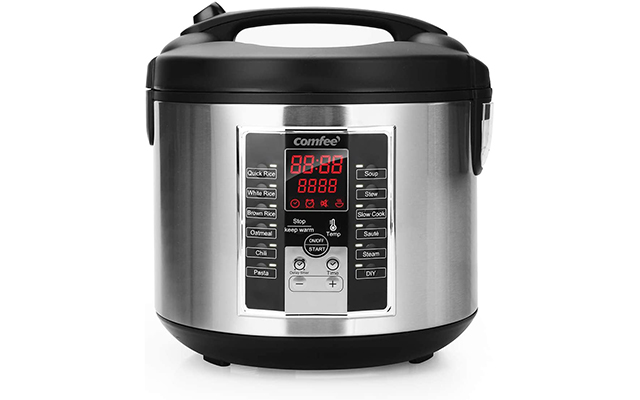
COMFEE’ All In One Multi Cooker – $60

comfee pressure cooker

This is a favorite among shoppers for an Instant Pot alternative. It has 12 cooking functions, including sauté, pasta, and DIY which can be used for yogurt or cake. It comes with a steam tray, measuring cup and two spatulas.

Instant Pot Comparison

Feature Instant Pot COMFEE
Cooking Modes 9 12
Cooking Capacity 6 quarts 5.2 quarts
Noteworthy Functions Yogurt, eggs, sterlize, sauté Quick rice, sauté, pasta, DIY

Where to Buy

This is an Amazon brand and so you’ll find it on Amazon for the current $59.99 price. We have seen it in the past for $55, but being $60 even with the rising cost of everything, the $60 price point is still a good deal.

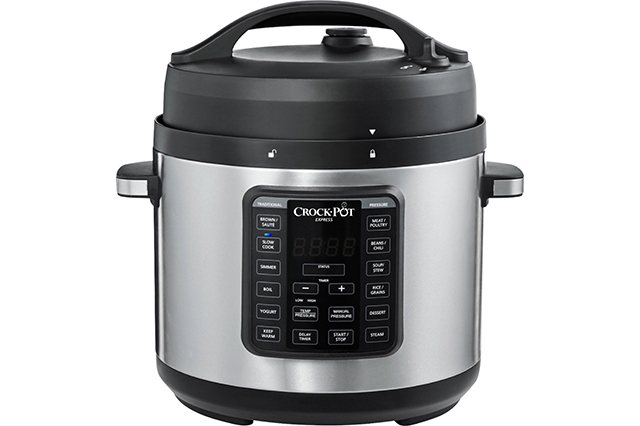
Crock-Pot Express Digital Max Multi-Cooker – $90

crock pot multi cooker

If you’re looking for a pressure cooker with a lot of bells and whistles, this one is a top choice. It’s got 12 settings including Slow Cook, Brown/Sear, Sauté, Simmer, Boil, Yogurt, Steam, Keep Warm, Meat/Poultry, Beans/Chili, Soup/Stew, Rice/Grains, Dessert, and Clean.

Instant Pot Comparison

Feature Instant Pot Crock-Pot
Cooking Modes 9 12
Cooking Capacity 6 quarts 6 quarts
Noteworthy Functions Yogurt, eggs, sterlize, sauté Quick clean, boil, simmer, yogurt, sauté, sear

Where to Buy

Best Buy currently has this model for $89.99. While that matches the sale price of the Instant Pot Duo, this $90 price is the everyday price, so when the Instant Pot is no longer on sale, this is a better bargain.

Insignia 6-Quart Multi-Function Pressure Cooker – $60

insignia pressure cooker

This super affordable option gives you 10 different settings: Rice, Multi-grain, Soup, Meat/Stew, Poultry, Fish, Steam Veggies, Beans/Chili, Quinoa and Cake. It comes with a measuring cup, rice scoop, soup ladle, cooking stand and condensation collector

Instant Pot Comparison

Feature Instant Pot Insignia
Cooking Modes 9 10
Cooking Capacity 6 quarts 6 quarts
Noteworthy Functions Yogurt, eggs, sterlize, sauté Cake, steam veggies, quinoa

Where to Buy

Insignia is Best Buy’s in-house brand. They currently have this multi-function pressure cooker for $59.99. If you’re looking for a quality Instant Pot alternative for a lower price, this is a great one to grab.

Aroma 20 Cup Digital Multicooker & Rice Cooker – $40

aroma multi cooker and rice cooker

This Aroma model is technically a rice cooker, but it does have several other functions. You can cook white rice, multi-grain rice, steam, cake, and sauté. While it doesn’t have as many functions as some of our other options, it’s still a good alternative for the price.

Instant Pot Comparison

Feature Instant Pot Aroma
Cooking Modes 9 7
Cooking Capacity 6 quarts 5 quarts
Noteworthy Functions Yogurt, eggs, sterlize, sauté Cake, sauté

Where to Buy

Target has this one for $39.99 as part of their current sale. The current regular price is $42.99, so you don’t need to rush to snag it. We don’t expect a lower price on this anytime soon. Amazon also has this for $39.92, beating Target’s price by a few cents!

Are there any other items you’d like us to do an alternative post for? Let us know in the comments!

The post 3 Affordable Alternatives to the Instant Pot appeared first on The Brad's Deals Blog.

Monday, May 2, 2022

Frugal Living Podcast: DIY Home Repair

Frugal Living Podcast: DIY Home Repair

In this episode of Frugal Living, host Jim Markus talks with Ashley French, a realtor and home DIYer with seven years of experience tackling her own home repair projects. You can listen to Frugal Living with Jim Markus here, on Apple PodcastsSpotifyAmazonAnchor.fmiHeartRadio, or anywhere you go to find podcasts.

In This Post

  1. Make a Ton of Lists
  2. Do Your Research
  3. Start Small
  4. Read a Transcript from This Episode
  5. More about the Frugal Living Podcast

Make a Ton of Lists

paper pad and pen
Almost any home improvement project is going to be a multistep endeavor, so French recommends breaking the project down into lists before you begin. This helps turn one massive project into smaller, actionable steps Some things to include in your list are:

  • What kind of work is involved in the project
  • What specifically do you want to change
  • What kind of work is that going to required
  • How much it will cost
  • Places you could save money

Do Your Research

woman on laptop researching

French explains that if you’re willing to put in the time researching, you can do a lot of work yourself. “I can’t stress it enough, I’ve used YouTube videos to teach myself how to use power tools and change plumbing and light fixtures. You can teach yourself almost anything on YouTube,” she says.

During a recent bathroom remodel, through her research and calling for quotes, she found that she could cut the cost of reflooring in half by installing the tile herself. The tiles she wanted were $2 per square foot, and she had been quoted between $2-$3 per square foot for labor. With that in mind, she looked up how to install the tiles and decided it was something she was comfortable handling herself.

French does add that it’s okay not to do the whole project yourself. If you feel a task is too complex or requires tools you’re not comfortable working with, or if the risk of potentially messing something up is too high, there’s nothing wrong with bringing in a professional.

Start Small

painted green wall diy
For first-time DIYers, remember to start small. French explains that a fresh coat of paint is one of the best places to start. It’s simple and cheap, and it can make a huge impact. You don’t even have to paint an entire room. You could start by just painting an accent wall or a piece of furniture to change up the look of a space.

French adds that she has a mantra: “Homes take time.” It’s a good reminder that any remodeling project is a marathon, not a sprint.

Read a Transcript from This Episode

Jim (00:02):
This is Frugal Living. Owning a home is an expensive undertaking. Aside from a down payment and regular mortgage and insurance payments for decades, the cost of maintaining a home can be overwhelming. I know this from experience. I bought a house not too long ago, and the list of things that we need to do is endless. It just goes on and on and on. That’s why I was delighted to speak with Ashley French, a person with much more experience with DIY projects and home remodeling. She’s a realtor, she’s remodeled two fixer uppers in the past, and she’s currently working on her third. Here’s our conversation.

Ashley (00:53):
I’m Ashley French and I am a DIYer and home remodeler.

Jim (00:59):
Thank you very much for making time to chat. Where do you start when you find an older home? What do you do first?

Ashley (01:07):
So for us, we are now living in our third fixer upper. So we’ve been doing this since 2014. And the way we start when we go into a home is we make a ton of lists. I cannot stress that enough. We make a lot of lists. And so then we’ll even break down our lists. So let’s say it’s a bathroom renovation that we are wanting to tackle. We’ll make a list of what are the aspects involved? What do we want to change? So maybe it’s flooring, the vanity, the lighting, the tub. And then from there, we’ll ask ourselves, what is it going to take to do the flooring? What are our options? What are the costs involved? And then we’ll do that for each aspect of the project. And then once we’ve really broken it down like that, we’ll ask ourselves, where can we save money? What can we do ourselves? What tools are involved? And then we go out and we do a ton of research online. We look for YouTube videos. We will look for websites or blog posts for each individual piece of the project and watch those and basically teach ourselves to do each aspect of the project, find out what tools are best. And it also helps us decide, are we capable of doing this? Maybe there is one piece of the project that we should hire someone to do, but for us, what’s most important is saving money, but also getting the look we want and making sure that we have a quality space once we’re done. But I say really, if you’re going into a fixer upper and you’ve got a lot of projects, just start with one, make lists, break it down, and really look at each aspect. And I think that will help you to tackle the project and for it to not be too overwhelming.

Jim (03:09):
It seems like the more expensive and relatively common way to do this is you find someone who says, “Hey, I do bathroom or kitchen renos.” They come over, they take a look, and then they tell you, “This is going to cost $50,000.” You’re saying, it sounds like, don’t hire them. Do this yourself. You can do that first breakdown yourself. And instead of price comparing, hey, this person says 50,000, this person says 30,000. There shouldn’t be one price you’re looking at. It should be a larger project broken down into smaller projects. And each of those is priced out. Am I understanding that correctly?

Ashley (03:45):
Yes, absolutely. And a good example I can give you is that we recently looked into, and even in the past, we have looked into doing the flooring ourselves compared to hiring someone. And in our experience, we have found that, like for example, tile, we were looking at some tile for a bathroom and it was going to be $2 a square foot for the actual tile. And then of course we have to buy the grout and you know, some of the different materials that come with doing tile. And just out of curiosity, we called around to get some quotes if we were to hire someone to lay it for us. And we were being told it could be anywhere from $2 to $3 per square foot in labor. So essentially it was doubling the price of the project by having someone come in and do it for us. And so when we saw the savings we could get by doing it ourselves, we sat down, watched videos. We learned how to do it ourselves. And what’s nice is that money that you save, obviously that’s great, you can put it in your pocket. But that money could also go towards another project in your home, maybe another room. So when we’re looking at a full project, we’re always looking at how can we break it down and where can we save money in each of these little aspects of the project? If you are new to DIY or just kind of wanting to get your feet wet, the first thing I would say, or what I have told people, is that paint is the easiest thing to start with. I feel like paint can be very forgiving, but paint also, in my opinion, can make a huge impact. So maybe you start with just painting one single wall in your house for an accent wall. Or if you are wanting to maybe paint a piece of furniture, maybe you pick something up at a thrift store, you want to give it new life. So paint is a great place to start if you’re just getting your feet wet into DIY. And then from there, you know, we actually just laid some vinyl flooring in our house we’re in now. And I will say that that, both vital and laminate, that’s a great DIY project because the flooring really just snapped together. And we watched a lot of YouTube videos and there was a ton of information out there that helped us learn kind of the tricks and some things that we should avoid when doing it. So that’s another one that I would say that if you’re new in DIY, that might be something that you could consider trying.

Jim (06:26):
It seems like YouTube is a pretty good resource for these projects.

Ashley (06:30):
Yes. I can’t stress it enough. I have used YouTube videos to teach myself how to use power tools. I have researched how to change out plumbing and light fixtures. So I feel like you can almost find any… You can teach yourself almost anything from YouTube.

Jim (06:50):
Totally agreed. I feel like this audience might already be the you-know-I’m-going-to-do-it-myself audience, but what do you think is the big-seeming project that isn’t such a big deal that might be worth tackling, even though it seems like, oh my God, professionals should do this?

Ashley (07:05):
I definitely would say flooring. On my social media, I get a lot of questions about flooring. We’ve done tile, laminate, we’ve done the vinyl. And I feel like people are so hesitant to get started because flooring is a huge aspect of a home. I mean, you walk in, that’s usually the first thing you see, and so people are afraid of messing it up. And I remember in our first home, when we did some flooring, it was very intimidating. But I will say when we laid tile for the first time, like I said, we took the time to watch YouTube videos and basically teach ourselves in advance. Once we got started, it wasn’t near as bad as I thought it was going to be. And it actually, this is going to sound crazy, but was enjoyable. We really enjoyed doing it. And I think that people are so afraid that it’s not going to be perfect and that people might notice that it’s not perfect, but I will tell you, we have never had a DIY project that comes out absolutely perfect. And I will tell you the only person that notices the tiny imperfections are you. And your guests, your family that come over to your home, they’re not going to see the teeny tiny details that maybe you’re aware of because you did the installation yourself. So I would say, don’t be afraid. Do your research, watch some YouTube videos. But flooring would definitely be something that I’d say, if you’re hesitant or on the fence, watch a few videos and maybe start with a smaller room, maybe a bedroom. And if you’re able to do it in the bedroom, then you know you’ll be able to do it throughout your home.

Jim (08:54):
How do you avoid being overwhelmed with the number of repairs on a house?

Ashley (08:58):
So that actually is something that, in the past, I had found myself struggling with a bit. When you move into a fixer upper, usually you have a lot of excitement in the beginning. And then when the list starts piling up of all the things that really need to get done, it is overwhelming and it can leave you with some regret or feeling anxious. And I have been in that place in the past. And something I learned from the homes that we fixed up in the past, I actually have a saying that I say to myself often, and that is home takes time. And it’s something that… Now it brings me a lot of relief when I say that to myself and I hear it. In the past, we really pushed ourselves to try to get everything done as quickly as possible. And what we found is that mistakes were definitely made, but we would rush through picking out maybe flooring or backsplash in the kitchen. And then when the project was done, we actually would look back and say, you know, those really weren’t the finishes we wanted or we’re not really happy with the final look or, you know, we didn’t do enough research looking into that flooring. And what ended up happening is we would have regrets, but we would want to change things out, which defeats the whole purpose of saving money and doing it ourselves. And now that we’re in our third fixer upper, I do have a completely different outlook. And I’m really taking a step back to slow down to just pick little projects at a time, take our time picking out the different finishes. But I know some homes, it’s not just about the cosmetic, like you said, with the pump and the chimney. Some things are safety issues that need to be done right away. So I would say a list is always your best friend. Make a list of the items that really need attention and then prioritize them in order of maybe safety and then functionality. Obviously if you need heat in the winter, that would be something at the top of the list. And just try to work on that list and just take it one project at a time, not looking at the entire house, because that can be very overwhelming, just trying to pick away at it little by little and just reminding yourself that home takes time.

Jim (11:34):
I like that saying a lot. I think my favorite bit about that is that considering finishes, considering, you know, the final look of your project, can be a really enjoyable process.

Ashley (11:47):
I remember when we first got started, we had very little experience. And really, even me personally, I didn’t really, really start picking up the power tools until about two years ago. And I think what made me more comfortable with starting small, like I said, with paint projects, seeing how you do, seeing if you get comfortable, and then slowly working your way up to larger projects. So maybe if you’re comfortable with paint, you can move on to using a sander or drill, moving up to a nail gun, maybe to a miter saw, and just kind of taking it step by step, working your way up. Obviously, if all of that freaks you out and you’re really not comfortable doing it, then that may be something telling you that maybe DIY is not for you. But what I found for me personally is when I’m taught how to use a tool safely and I feel safe using it, then I have no hesitation. I’m really independent and I’m confident and I’m excited to use the tool. But I remember being new to this, and the thought of using a miter saw was so scary and so intimidating because I had no idea what I was doing. But I took the time, I watched a bunch of YouTube videos, and my husband does have experience with that. So I asked him to take the time to teach me to kind of stand next to me and help me do it. So if you’re new to DIY, take baby steps, watch some videos that teach you how to do it, see if you have any family or friends that would help you do it, and just see how comfortable you are with it. If it is something that you just do not enjoy, then maybe DIY is not for you. But I will tell you that the feeling you get when you complete a project all on your own is a feeling like no other. And of course the savings involved is a great feeling, but also the accomplishment of doing something on your own and being able to step back and look and take in what you’ve completed, that is an amazing feeling. So even if you’re feeling a little worried throughout the process, see if you can finish a project and get that satisfaction and that feeling of getting it done. And I’m kind of talking about maybe smaller to medium-sized renovations. Now, if we’re talking about large renovations, like an entire, let’s say you want to gut a kitchen and do a brand-new kitchen and you’re new to DIY. That’s when I would really say it’s important to make a list and break down all the different components of the project, do some research and find out what do you think you’re capable of doing, what looks like something you could potentially do on your own, but also make a list of what you are not comfortable doing. And there may be some aspects of the project that you do need to hire a professional to do. And a great example is we did a kitchen renovation in the past. We did, I’d say about 80% of it on our own, but our sink had to be moved. We did do some research. We watched some videos on moving plumbing. And at the end of the day, we just decided we did not feel comfortable moving plumbing, doing new pipe, and the risks involved if we did not do it correctly. So that was one of the things on our list that we decided we are not going to DIY this, we are going to hire a professional. So I think that when you use the list method and you really break everything down, it helps you look at the projects and decide… What are you comfortable with? What can you learn how to do and what you should possibly hire a professional to do for you?

Jim (15:48):
Is there anything else that you have for kind of advice for a frugal audience?

Ashley (15:54):
So maybe a little bit outside the realm of home renovation… In general, when it comes to my home, I am a very frugal person, but I feel like I always am drawn to a more expensive-looking interior design and decor. And something that I feel like I have kind of blossomed with over the last couple of years is finding ways to recreate pieces of furniture and pieces of home decor that I’ve seen while shopping and coming up with unique ways to create the exact same look at a fraction of the price. And that has really, really changed my home and my sense of style because I’m not giving up the look that I want. I’m still getting that high-end look, but I’m doing it at such a fraction of the price. And really the way I’m doing it is I look at whatever it is, the piece of furniture, the piece of decor. And I really look at it and I look at the shape, what it’s made out of. And then I ask myself, what is out there that is similar or something that I can start with and add to to get the same look. And a year ago, I really got into this and I started sharing this on my social media channels. And it really took off. And my followers, who were calling me the DIY Dupe Queen, I was duplicating these looks. And so a couple of examples, there’s a mirror that is sold by a home decor company called Anthropology. It sells for over a thousand dollars. And I wanted that mirror so bad, but I would never spend a thousand dollars on a mirror. So I just kept looking at it. And I said, you know what? That’s just a basic mirror with some decorative little finishes on the side, like some little appliques. And I said, how can I make this? And so I actually found these wooden appliques that resembled the same detail that was on that mirror. I superglued them onto a basic mirror that I had, painted the whole thing gold. And it was such a close resemblance to the original piece that when I shared that, people couldn’t believe that I had made that for under a hundred dollars when the original mirror was over a thousand dollars. And that opened my eyes to this whole other side of home decor and DIY. And now, whenever I see something that I really want for my home that’s really expensive, I actually challenge myself to find a way to recreate it at a fraction of the price. And I really even surprise myself sometimes because it is so possible. So to anyone out there who maybe does have that eye for design, and maybe not the budget for it, I would just challenge you to get creative, to ask yourself, how can I create the same look? Maybe go thrifting, go to some thrift stores, look for pieces, and then transform them with paint or texture. I’ve done a lot of projects like that. And I just want to say, you can get that look, whatever you’re saving on your Pinterest board, you can get that same look on a budget, no matter what your budget is, you can get that same look.

Jim (19:41):
BradsDeals.com has the best deals sourced from around the internet. It’s online shopping made safe, it’s online shopping made easy, and more importantly, it’s made especially for you, the frugal-minded person. Special thanks to Ashley French, Sydney Smith, and H. Borkowski. I’m Jim Markus. Thanks for listening.

More about Frugal Living with Jim Markus

This episode was sponsored by Charlotte’s Web, and we scored a discount for our listeners. Use our code FRUGALPODCAST at Charlotte’s Web for 15% off sitewide. Some exclusions apply.

To hear more from Ashley French, check out the latest episode of Frugal Living. Frugal Living is a podcast for smart consumers. How do you spend less and get more? The show, sponsored by Brad’s Deals, features interviews, stories, tips, and tricks. Jim Markus hosts season three, out now.

Subscribe Now on Spotify

What did you think of this week’s episode? Let us know in the comments!

The post Frugal Living Podcast: DIY Home Repair appeared first on The Brad's Deals Blog.

articles